Introduction / Overview of the Programme
Physiotherapy is a healthcare profession focused on promoting movement, restoring physical function, reducing pain, and improving quality of life through evidence-based therapeutic interventions.
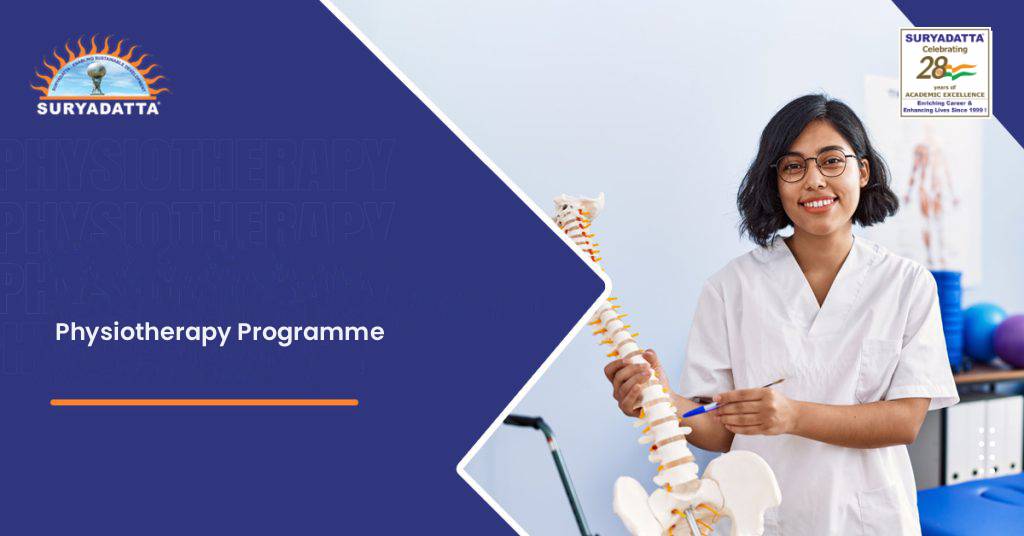
At Suryadatta Institute of Health Sciences College of Physiotherapy, Bavdhan, Pune offers a Bachelor of Physiotherapy Programme. It is a a 4 & ½ years programme including 6 months internship. This programme is approved by DMER and is in affiliation with MUHS, Nashik. Intake capacity for this programme is 100.
The Physiotherapy programme is designed to prepare students with scientific knowledge, clinical competence, and professional skills required to assess, diagnose, treat, and prevent physical impairments and disabilities.
The programme combines classroom learning with practical clinical training to develop healthcare professionals capable of contributing effectively to patient rehabilitation and wellness.
Objectives and Key Highlights of the Course
The Physiotherapy programme aims to develop skilled professionals who can provide patient-centred care across different healthcare settings.
The major objectives of the course include developing a strong understanding of human anatomy, physiology, biomechanics, and rehabilitation sciences while enhancing clinical reasoning and therapeutic decision-making.
Key highlights of the course include
- Comprehensive theoretical and practical learning
- Exposure to modern rehabilitation techniques
- Clinical training in hospitals and healthcare centres
- Focus on preventive, curative, and rehabilitative healthcare
- Development of communication and patient management skills
- Opportunities for research and community healthcare participation
Eligibility Criteria
Admission to the Physiotherapy programme requires completion of higher secondary education (10+2 or equivalent) with science subjects such as Physics, Chemistry, and Biology from a recognized board and NEET.
Duration of the Programme
The Bachelor of Physiotherapy (BPT) programme typically extends over four and a half years, including academic study and a compulsory clinical internship period. The curriculum is structured with annual examination pattern and integrates both theoretical instruction and clinical practice.
From AY 2026-27, NCAHP will regulate the BPT course nationwide, making it a 4+1-year course.
Special Features / USP of the Course
One of the distinctive features of the Physiotherapy programme is its strong emphasis on practical healthcare delivery and rehabilitation sciences.
Students receive extensive clinical exposure and hands-on training under professional supervision.
The programme promotes interdisciplinary learning and encourages students to adopt holistic approaches toward patient care.
The programme also emphasizes evidence-based practice and modern therapeutic techniques.
Infrastructure Facilities Available
At Suryadatta Institute of Health Sciences College of Physiotherapy, Bavdhan, Pune an advanced infrastructure is provided to support learning and clinical development. Facilities include
- Modern classrooms and digital learning resources
- Anatomy and physiology laboratories
- Anatomy and physiology laboratories
- Physiotherapy and rehabilitation laboratories
- Exercise therapy and electrotherapy units
- Library and e-learning facilities
- Clinical training centres and affiliated hospitals
- Seminar halls and research support facilities
Skill Development and Practical Exposure
The programme focuses significantly on building practical and professional competencies. Students develop skills in
- Patient assessment and clinical evaluation
- Therapeutic exercise prescription
- Manual therapy techniques
- Rehabilitation planning and execution
- Communication and counselling skills
- Teamwork and healthcare ethics
- Clinical documentation and patient management
Practical exposure is gained through laboratory sessions, case studies, hospital postings, and community health programmes.
Internship / Industrial Training Opportunities
Clinical internship is an integral component of physiotherapy education. During internship training, students work under qualified professionals in hospitals, rehabilitation centres, sports clinics, community healthcare centres, and specialty departments. This practical experience enables students to apply theoretical knowledge in real healthcare situations and gain confidence in patient care.
Career Opportunities after Completion of the Course
The Institute’s Placement Cell supports the graduates for diverse career opportunities in both public and private sectors. Career options include
- Physiotherapist in hospitals and clinics
- Rehabilitation specialist
- Sports physiotherapist
- Orthopaedic and neurological rehabilitation expert
- Paediatric Physiotherapist
- Community healthcare professional
- Academic and research roles
- Consultant in wellness and fitness centres
- Entrepreneur through independent physiotherapy practice
Students may also pursue higher education and specialization in advanced physiotherapy disciplines after completion of Bachelor’s degree programme.
Achievements of Students/Department (if any)
- academic excellence
- clinical performance
- research activities
- participation in healthcare camps
- presentations at conferences
- national and international competitions
collaborations with hospitals and healthcare organizations to strengthen professional training and placement opportunities.
Scope and Future Prospects of the Programme
The scope of Physiotherapy continues to expand due to increasing awareness of rehabilitation, preventive healthcare, and healthy living. Growing demand exists in hospitals, sports medicine, elderly care, neurological rehabilitation, occupational health, and community healthcare services. Advancements in medical technology and healthcare systems have created significant opportunities for physiotherapy professionals both nationally and internationally.
As per WHO database the existing physiotherapist ratio is as follows
- Developing Regions: In countries across Africa and South East Asia, the average ratio can be as low as 0.23 to 0.59 physiotherapists per 10,000 population.
- Developed Regions: Regions like Europe and Oceania boast much higher densities, with countries like Norway, Germany, and Australia reaching ratios of up to 14 to 25 physiotherapists per 10,000 population.
https://world.physio/sites/default/files/2025-01/AMC2024-Global-report.pdf
The Physiotherapy programme therefore offers a strong foundation for students seeking a meaningful and impactful career in healthcare, dedicated to improving mobility, restoring independence, and enhancing the overall well-being of individuals and communities.